Recognitions

The Manager Recognition Gap: Why Middle Managers Are the Weakest Link
The Manager Recognition Gap: Why Middle Managers Are the Weakest Link
11:32
Introduction
Ask most HR leaders where their recognition program is weakest and they'll point to participation rates, reward budgets, or platform adoption. Rarely do they point to the one factor that research consistently identifies as the highest-impact variable in any recognition program: the behavior of middle managers. If your manager recognition program isn't explicitly designed to support and measure manager-driven recognition, you're building on the weakest possible foundation — and this article explains exactly why, and what to do about it.
Why manager-driven recognition has the highest impact on engagement
Manager recognition isn't just one input among many — it's the single most powerful driver of employee engagement and retention. Employees who receive recognition from their direct manager are significantly more engaged, more productive, and less likely to voluntarily leave than those who receive only peer or executive recognition.
Gallup's research is unambiguous on this point: managers account for at least 70% of the variance in employee engagement scores across business units (Gallup, State of the Global Workplace, 2024). That variance doesn't come from company strategy or compensation alone — it comes directly from the day-to-day behaviors managers exhibit toward their teams, and recognition is one of the most visible of those behaviors.
The Workhuman and Gallup joint report Unleashing the Human Element at Work found that employees who feel strongly that their manager recognizes them for good work are 4x more likely to be engaged and 56% less likely to be looking for a new job. These aren't marginal gains. They're the difference between a team that stays and a team that quietly disengages while updating their resume.
What manager recognition looks like in practice
Effective manager recognition has three qualities that distinguish it from performative praise: it's timely, it's specific, and it connects the individual's contribution to something that matters — to the team, the project, or the organization's goals.
|
Specific vs. generic recognition A manager saying "great job this week" on a Friday afternoon is not recognition. A manager saying "the way you handled the client escalation on Wednesday — staying calm, finding the workaround, keeping them informed throughout — is exactly the kind of ownership we need on this account" is recognition. The specificity is what makes it land. The timeliness is what makes it credible. |
Why middle managers don't recognize enough
If manager recognition is so impactful, why is it chronically underused? The answer isn't that managers don't care — most do. The answer is structural. Three specific barriers consistently prevent managers from recognizing their teams at the frequency and quality that drives engagement.
Barrier 1: Time pressure and cognitive load
Middle managers are operationally overloaded. They're simultaneously accountable for team output, individual performance management, cross-functional coordination, and increasingly, their own individual contributor responsibilities. Recognition — which is immediate, discretionary, and produces no visible metric — gets deprioritized in favor of tasks with clearer deadlines and harder consequences.
This isn't a character flaw; it's a predictable response to competing demands. Recognition loses to the urgent every time, unless it's made easy enough to be habitual rather than effortful.
Barrier 2: Confidence and skill gaps
Many managers genuinely don't know how to recognize well. They either default to generic praise ("you're doing great") that employees discount, or they avoid recognition altogether because they're uncomfortable with the interpersonal dynamic, unsure whether their recognition will feel authentic, or worried about being seen as playing favorites.
Recognition is a skill, and like most management skills, it's rarely taught explicitly. Organizations invest heavily in manager training for performance conversations, coaching, and goal-setting — but recognition training is almost always absent from the curriculum.
Barrier 3: No visibility, no accountability
In most organizations, there is no mechanism for HR or senior leadership to see whether managers are recognizing their teams. Recognition happens (or doesn't happen) invisibly. There are no manager recognition participation metrics in most HR dashboards. There are no recognition frequency benchmarks by team or department.
Without visibility, there's no feedback loop. Managers who rarely recognize their teams face no consequence and receive no coaching. Managers who recognize consistently receive no acknowledgment of that behavior — which is itself a recognition failure.
The organizational cost of the manager recognition gap
The manager recognition gap isn't an abstract culture problem. It has measurable financial consequences.
Voluntary turnover costs organizations between 50% and 200% of the departing employee's annual salary when recruitment, onboarding, productivity ramp, and lost institutional knowledge are factored in (SHRM, 2024). Gallup estimates that actively disengaged employees cost the US economy $1.9 trillion in lost productivity annually (Gallup, 2024). While these numbers are broad, the underlying mechanism is specific: disengagement accumulates from unrecognized effort, and unrecognized effort flows most directly from manager inaction.
Teams whose managers recognize frequently show measurably lower voluntary turnover, lower absenteeism, and higher productivity scores. The delta between high-recognition manager teams and low-recognition manager teams, within the same organization, is often larger than the delta between the organization and its competitors.
How to design a manager recognition program that actually works
Closing the manager recognition gap requires more than encouraging managers to "recognize more often." It requires deliberate program design that addresses all three barriers — time, skill, and visibility — simultaneously.
Make recognition frictionless for managers
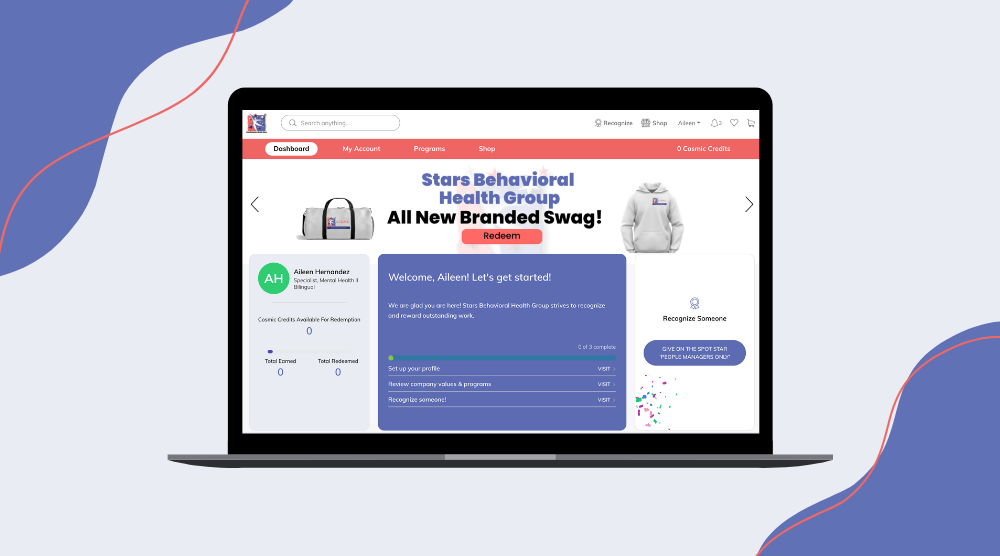
The single most effective structural change is reducing the effort required to recognize. If recognition requires navigating a platform, writing a formal nomination, or waiting for a monthly cycle, busy managers won't do it consistently. The best recognition platforms integrate recognition into the tools managers already use — Slack, Microsoft Teams, email — so that a recognition moment can be captured in 30 seconds without context-switching.
Automated triggers help too. Milestone alerts (work anniversaries, project completions, quota achievements) prompt managers to recognize at natural moments without requiring them to remember.
Build recognition into manager workflows explicitly
Recognition should appear on one-on-one meeting agendas, team cadence templates, and manager checklists — not as a suggestion, but as a standard item. When recognition is embedded in the workflow rather than sitting outside it, frequency increases without requiring additional willpower from the manager.
Some organizations run weekly manager prompts: a brief nudge (via email or platform notification) asking managers to identify one team member to recognize before the week ends. The prompt doesn't need to be elaborate. The consistency matters more than the mechanism.
Train managers on recognition quality, not just quantity
Recognition training should be included in manager onboarding and reinforced in ongoing development programs. The training doesn't need to be extensive — a focused 90-minute session covering the difference between generic and specific recognition, the impact of timeliness, and how to connect recognition to values and outcomes is enough to meaningfully shift manager behavior.
The most effective format is practice-based: managers write real recognition messages for real team members in the session and receive structured feedback. Abstract instruction rarely changes behavior. Practiced skill does.
Give HR visibility into manager recognition behavior
Platform-level analytics should surface recognition participation by manager — showing which managers are recognizing frequently, which aren't, and whether recognition is concentrated on the same employees repeatedly. This data shouldn't be used punitively, but it should inform manager coaching conversations and be part of the broader manager effectiveness picture.
When recognition behavior is visible, it becomes coachable. When it's invisible, it stays inconsistent.
Frequently asked questions
-
A manager recognition program is a structured approach to ensuring that managers consistently recognize and appreciate the contributions of their direct reports. Unlike peer recognition programs (which are employee-driven) or executive recognition (which is top-down and infrequent), manager recognition programs specifically focus on the direct manager relationship — the most impactful source of day-to-day recognition in any organization.
-
Research suggests that weekly recognition — or at minimum, recognition tied to every significant achievement or behavior — produces meaningfully better engagement outcomes than monthly or quarterly recognition cycles. Gallup recommends that managers recognize at least one team member every week as a baseline practice. Frequency matters more than formality: a specific, timely verbal acknowledgment outperforms an annual award.
-
The three most common reasons are time pressure (recognition gets deprioritized against urgent operational demands), skill gaps (managers don't know how to give specific, meaningful recognition), and lack of accountability (there's no visibility into who is and isn't recognizing, so there's no feedback loop). Effective manager recognition programs address all three through platform design, training, and analytics.
-
Recognition platform analytics can track recognition frequency by manager, showing how often each manager gives recognition, how specific those recognitions are, and whether recognition is distributed equitably across the team or concentrated on a small number of employees. These metrics should be reviewed in manager effectiveness conversations and used to identify coaching opportunities — not as a performance management tool.
|
Ready to build a stronger manager recognition program? Recognition programs work best when they're consistent, visible, and easy for managers to act on. Rewardian gives HR teams the tools to build recognition habits that stick — from manager-facing recognition prompts and automated milestone alerts to real-time analytics that show you exactly where recognition is thriving and where it's falling flat across your management layer. If you're ready to turn manager recognition from your weakest link into your strongest engagement driver, we'd love to show you how. |
Barry Gallagher
Barry is Head of Content Strategy at Rewardian, where he covers employee recognition program design, sales incentive strategy, and HR technology. He has spent eight years working with mid-market HR and sales operations teams on recognition and incentive program architecture.