Recognitions


Why Employee Alignment Matters (and How to Build It)
Why Employee Alignment Matters (and How to Build It)
Employee alignment, when people genuinely understand and believe in where the company is going and how their own work fits into it, is one of the quieter drivers of engagement and performance. Aligned employees tend to be more collaborative, more innovative, and more willing to go the extra mile, because they can see the point of the extra mile. When people lack that line of sight into the organization’s vision, they struggle, and the work starts to feel like a series of disconnected tasks rather than a shared effort toward something.
It’s a good moment to take alignment seriously, because it’s slipping. Global employee engagement fell to around 20% in 2025, its lowest level in years, and roughly 28% of fully remote employees now say they feel disconnected from their organization’s mission, near a decade-low. But alignment is also widely misunderstood, often treated as a communication problem to be solved by broadcasting the vision more loudly. Real alignment is subtler, and more valuable, than that. Here’s why it matters and how to build it honestly.
What alignment actually is
Alignment is more than knowing the mission statement; it’s understanding the strategy, believing in it, and seeing how your own role connects to it. Deloitte’s work on belonging frames the goal well, describing three ingredients: comfort (being treated fairly and respected), connection (meaningful relationships with a team), and contribution (seeing how your work matters to results). An aligned employee can honestly say they feel connected to the company’s vision, values, and way of operating, and, crucially, can see the thread from their daily work to the bigger picture. That combination of understanding and genuine buy-in is what distinguishes alignment from mere compliance, and it’s the part that actually drives discretionary effort.
Why it matters, with an honest caveat
The business case for alignment is strong. Engagement, which alignment feeds directly, is tied to hard outcomes: Gallup’s long-running research links highly engaged teams to roughly 23% greater profitability, along with better performance and lower attrition. Employees who feel their personal values align with the organization’s show higher engagement and a stronger sense of belonging, and people who understand the strategy tend to rate their companies more positively on collaboration, morale, and culture. The honest caveat: much of this evidence is correlational. Healthy organizations both align their people and earn positive ratings, so alignment is as much a marker of a well-run company as a lever you can pull in isolation. That doesn’t make it unimportant; it means alignment works as part of doing the fundamentals well, not as a substitute for them.
The alignment gap is real, and growing
If alignment mattered only at the margins, the current numbers wouldn’t be so concerning. Engagement is at a multi-year low, manager engagement (the layer most responsible for translating strategy to teams) has fallen further still, and disconnection from company mission is rising, especially among remote and hybrid workers who miss the informal, in-person cues that used to carry the ‘why.’ A meaningful share of employees also report that leadership struggles with clear communication and transparency. None of that is cause for despair; it’s the opposite. It means alignment is genuinely underdone in most organizations, which makes it one of the higher-leverage, lower-cost opportunities available to a leadership team willing to work at it.
How to build it
Building real alignment is less about broadcasting and more about connecting. A few principles matter most. Lead from the top, then cascade. Employees understand the strategy best when they hear it directly from senior leaders, so the CEO and executives should own the narrative, but every manager also needs to translate it for their own team, connecting the company’s direction to the work in front of people. Communicate often, and make it two-way. Frequent updates help, but the biggest mistake is treating alignment as a monologue. One-way ‘communicate the strategy monthly’ broadcasting slides into corporate noise that people tune out, or worse, distrust; genuine alignment comes from involving people, inviting questions, and letting them shape and challenge the direction. Alignment built on buy-in lasts; alignment demanded as compliance doesn’t. Connect the why to each role. People need to see how their specific work ladders up to the mission, or the vision stays abstract. Make it safe to be human, and to disagree. When people can bring their full selves to work and voice doubts without penalty, you get real alignment and better ideas; alignment is not conformity, and a team that can question the strategy is more committed to it, not less. Keep communication channels clear and consolidated. Streamline where important updates live rather than scattering them across a dozen tools, since app sprawl and constant context-switching bury the message you’re trying to land.
The most important part: match words to actions
One principle outweighs all the tactics. Alignment to a stated vision only works if the organization actually lives it. Communicating values that leadership visibly doesn’t follow, or a strategy the company’s decisions contradict, does more damage than saying nothing at all, because it teaches people that the words are just words. Employees align themselves with what an organization does, not only with what it says. So the real work of alignment isn’t a better all-hands deck; it’s the harder, more valuable job of making sure the company’s everyday choices, about priorities, about people, about how it treats its own stated values, are consistent with the vision you’re asking everyone to rally behind. Get that right, and the communication becomes believable. Get it wrong, and no amount of communication will make people align with a vision they can see the company doesn’t mean.
The bottom line
Employee alignment is a genuine, and currently underused, driver of engagement, innovation, and performance, and with engagement at a low ebb, there’s real headroom to gain. But it’s earned, not announced. It comes from leaders who communicate the strategy clearly and often, from two-way conversation rather than top-down broadcasting, from helping every person see how their work connects to the mission, and, above all, from a company whose actions match its words. Treat alignment as a communication campaign and it fizzles; treat it as a consistent, honest, participatory practice, backed by the fundamentals of fair pay and good management, and it becomes one of the most durable advantages an organization can build.
See it in action
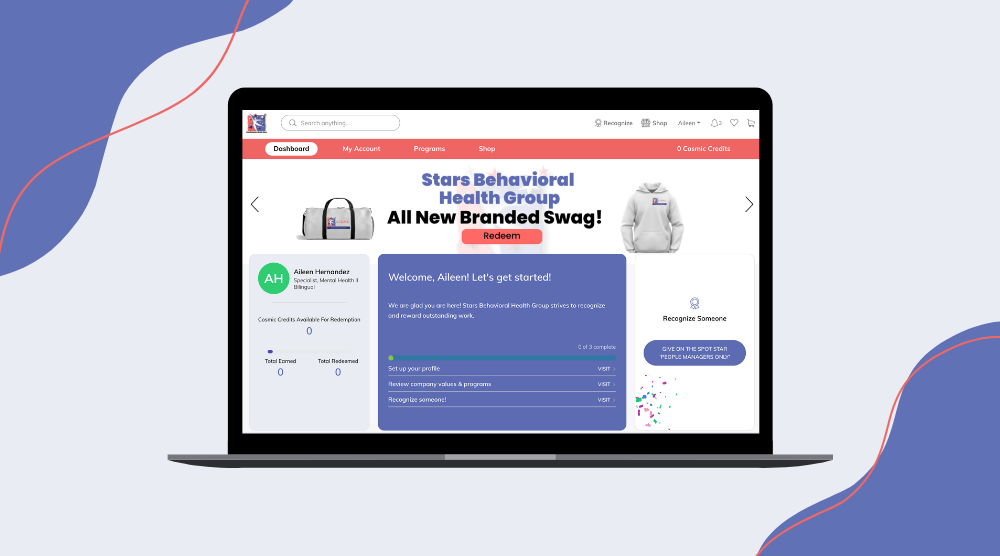
Rewardian helps teams design recognition and incentive programs that drive engagement, performance, and retention. Request a demo to see how.
