
Recognitions

Inclusive Leadership: Behaviors That Build Belonging
Inclusive Leadership: Behaviors That Build Belonging
In short: Inclusive leadership is the set of everyday behaviors that make everyone on a team feel respected, safe to speak up, and able to do their best work. It is learnable behavior rather than a personality type, it rests on psychological safety, and it is the single biggest lever a leader has on whether people feel they belong.
Belonging is not built by a company-wide campaign; it is built at the team level, in how a manager runs a meeting, responds to a bad idea, or decides whose work gets noticed. That is why inclusive leadership has moved from a nice-to-have to a present-tense test of any manager: research from BCG and others finds that employees who do not feel included are markedly more likely to leave within a year. The encouraging part is that inclusive leadership is a set of behaviors, not a fixed trait — which means it can be learned. This guide covers what it is, the core behaviors that define it, why psychological safety sits underneath them, and how to develop and measure the whole thing.
What inclusive leadership is
Inclusive leadership is the practice of leading so that people of different backgrounds and viewpoints feel valued and can contribute fully. The research converges on a consistent picture. Deloitte describes six signature traits — commitment, courage, cognizance of bias, curiosity, cultural intelligence and collaboration. Catalyst's cross-country study identified four behaviors that predict whether employees feel both unique and like they belong: empowerment, humility, courage and accountability. The common thread is that these are observable behaviors a leader chooses, not personality gifts they are born with, and they can be built with feedback and practice like any other capability.
The core behaviors
Across the frameworks, a handful of behaviors do most of the work:
|
Behavior |
What it looks like |
|---|---|
|
Model humility and vulnerability |
Admit your own mistakes and say “I don't have the answer” — it lowers the cost of honesty for everyone else |
|
Invite and value dissent |
Treat pushback as a useful signal, not a threat; respond to early ideas with curiosity rather than evaluation |
|
Share airtime fairly |
Draw out quieter voices and address interruptions or dismissals directly when they happen |
|
Recognize and give feedback equitably |
Spread genuine recognition and useful feedback across the whole team, not just the most visible or most similar people |
|
Sponsor overlooked talent |
Advocate for people in the rooms they are not in, especially those outside the informal networks |
|
Check your own bias |
Notice the patterns in who you praise, promote and rely on by default |
Equitable recognition and feedback
One of those behaviors deserves a closer look, because it is both high-impact and easy to get wrong. Recognizing contributions and treating people fairly are consistently identified as core inclusive behaviors — but recognition naturally drifts toward the most visible people and, often, the ones most like the leader. Good intentions do not self-correct that drift; you have to be able to see it. That is where recognition bias becomes a leadership blind spot rather than an abstract concern.
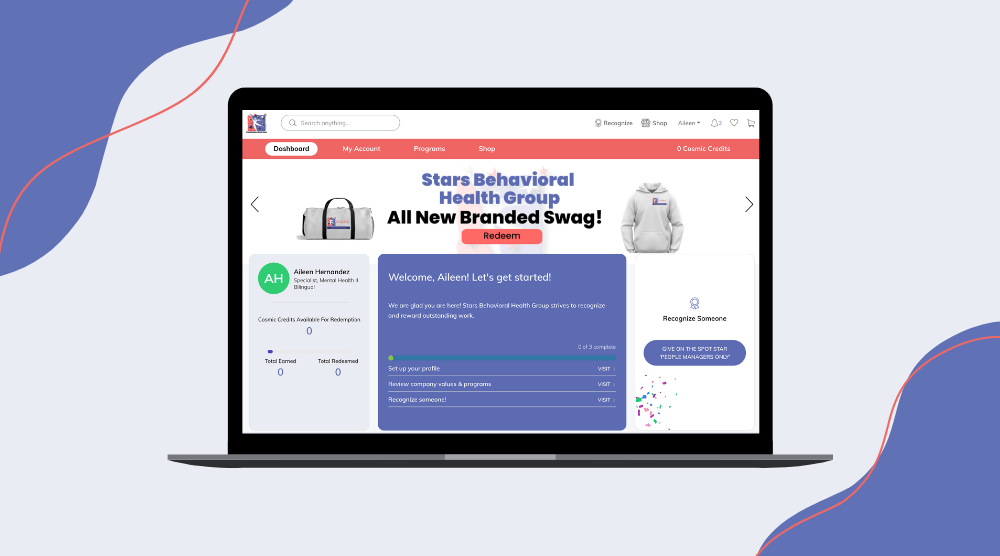
Rewardian is a SaaS HR-technology platform for employee recognition, rewards and engagement, and it makes this behavior measurable. Rewardian's analytics show a leader whether their recognition is spread evenly across the team or pooling around a familiar few, turning a good intention into something you can actually check; and Rewardian's recognition and rewards engine makes it easy to give consistent, specific recognition to everyone who earns it, so fair recognition becomes a habit rather than a hope. It is one inclusive-leadership behavior among several, but a rare one you can put a number on.
Psychological safety is the foundation
Underneath all of these behaviors sits psychological safety — whether people feel able to speak up, disagree, admit a mistake or name a problem without fear of being embarrassed or punished. Amy Edmondson's research, and Google's widely cited study of what makes teams effective, both put it at the center: it is the strongest single predictor of whether a team performs. Crucially, psychological safety is not a mood; it is a structural feature of a team produced by specific leader behaviors — modeling vulnerability, responding to dissent with curiosity, and addressing dismissive behavior directly. It is also hardest to maintain exactly when it matters most: under conflict, restructuring and time pressure, when leaders tend to fall back into their least inclusive habits.
How to develop and measure it
Because these are behaviors, they respond to feedback. The most effective development pairs 360-degree and upward feedback — which increasingly asks specifically how a leader handles dissent and distributes voice — with deliberate practice and coaching. And measure it by outcomes rather than intent: track team belonging and psychological-safety scores, advancement and retention gaps across groups, access to sponsorship, and whether recognition is reaching everyone. A growing number of organizations now put inclusive behaviors on the leadership scorecard alongside financial results, on the simple logic that if a leader scores poorly on climate, a performance problem is usually not far behind.
Barry Gallagher
Barry is Head of Content Strategy at Rewardian, where he covers employee recognition program design, sales incentive strategy, and HR technology. He has spent eight years working with mid-market HR and sales operations teams on recognition and incentive program architecture.